Good Living – Building Code Reform
NEW “REGIONAL TOWN PLANNING REGULATION” (RRU-GOOD LIVING) FOR BRUSSELS

“Living in the city is one of the most effective solutions against the massive loss of biodiversity and natural resources. Architecture has thus become an important element of a systemic response that restores our connection with nature. To be effective, this connection needs space in the city, while available spaces are scarce. For this reason, through ‘Good Living,’ we propose thinking about the regional territory starting from the existing open space and its qualities. By innovating with new forms of urban densification and high-quality, adaptable buildings, combined with more vegetation and biodiversity. Every project requiring an urban planning permit must be seen as a sustainable contribution to the entire city. This goal will only be possible through a shared vision between administrations and public authorities, shared with society: a Brussels culture of quality urban space.”
Oana Bogdan (Chairwoman of the RRU/GSV Good Living Committee)
The Brussels-Capital Region faces increasing ecological and social challenges, alongside growing demands for land due to urban expansion, infrastructure, and the energy transition. To address these pressures, the region reformed its Regional Town Planning Regulations (RRU) in 2021, marking a shift toward an approach that emphasizes intelligent urban densification, adaptable high-quality buildings, and expanded open spaces to reduce emissions and enhance biodiversity. This reform was developed by the Expert Committee for Good Living, chaired by Oana Bogdan, and composed of experts from both academia and the public and private sectors. The committee’s areas of expertise spanned architecture, urban planning, environmental sustainability, and development. Its members included Oana Bogdan, Benoît Moritz, Anne Ledroit, Jens Aerts, Hélène Rillaerts, Sven Grooten, Luc Eeckhout, Thierry Baneton, Pierre-Alain Franck, Kristiaan Borret, Vanessa Mosquera, and Katelijne Franssens.
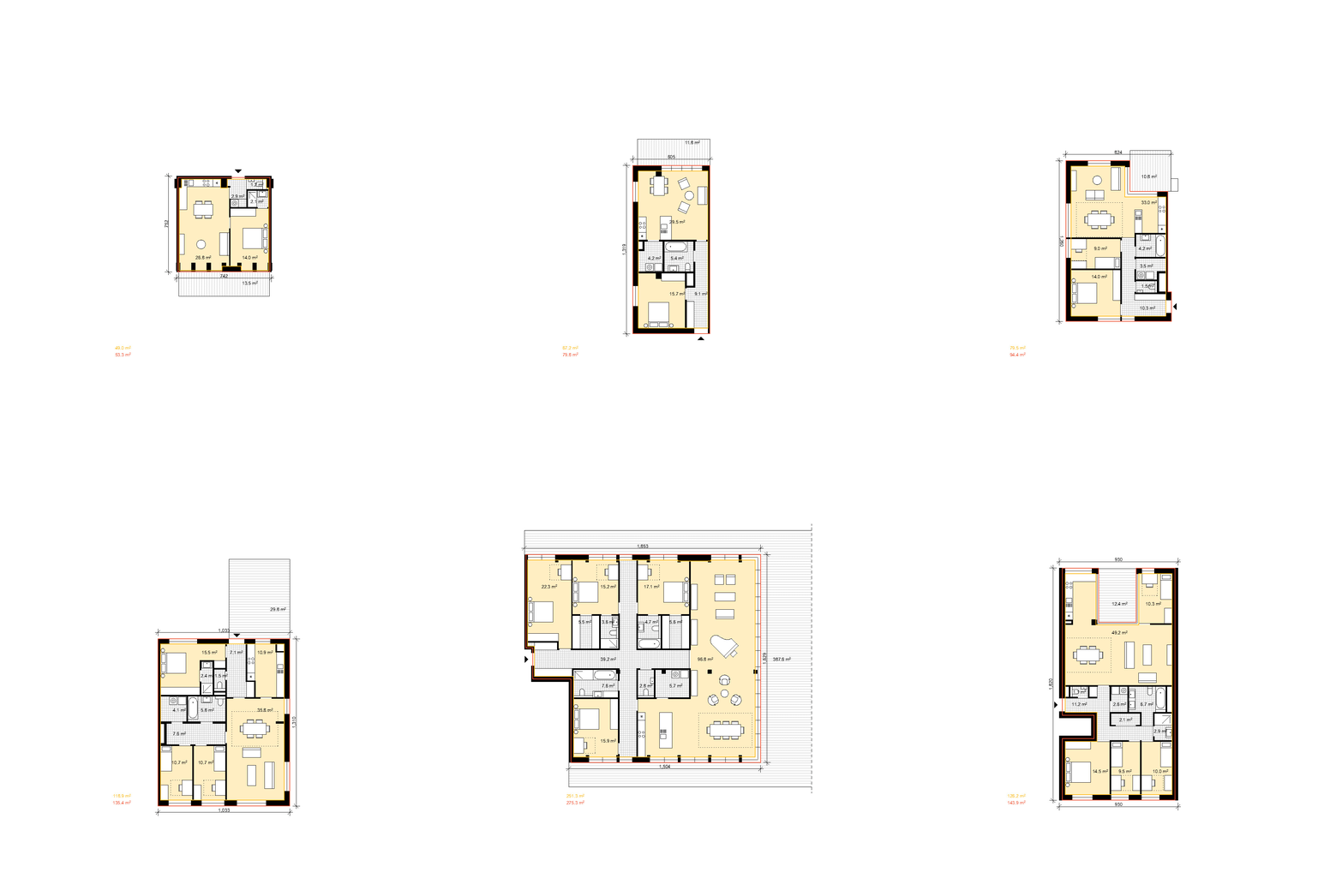
The mission of the reform was to create a new culture of high-quality urban spaces and buildings. This involved rethinking and rewriting the existing regulations, which govern both buildings and open spaces. The work of the expert committee, which included input from all the municipalities of Brussels, culminated in a comprehensive report that formed the basis for the updated regulations. The new framework, written in a collaborative manner, incorporates simplified language, clear objectives, and explanatory diagrams, making it more accessible and actionable.
The new RRU is structured around three core themes: open spaces, urbanity, and livability. These measures are designed to be quality-oriented and environmentally ambitious, with a focus on enhancing the region’s natural resources, reducing emissions, and improving biodiversity. This proactive approach transforms urban areas into vibrant, sustainable environments that regenerate ecosystems and meet the needs of a growing population.
The new regulations align with broader EU strategic goals, such as the Sustainable Development Goals and the European Green Deal, positioning Brussels as a leader in integrating sustainability into urban development. By prioritizing environmental sustainability and simplifying the regulatory framework, the reform makes it easier for municipalities, developers, and citizens to contribute to shaping a more sustainable and vibrant Brussels.